Article
Music Services Offering Live Recordings and Broadcast Versions Not Included on Standard Albums
A studio album is only one version of an artist’s work. The same song may also exist as a concert recording, radio session, television performance, festival set, acoustic arrangement, encore, or extended improvisation.
These versions are not always grouped with the artist’s standard albums. Some are released as separate live albums or EPs. Others remain on a broadcaster’s official channel, an artist-approved concert service, or a permission-based recording archive.
The fastest way to find the right version is not to search every music platform randomly. First identify the performance, then search the type of service most likely to hold it.
The Recording Comes Before the Platform
Begin with as much information about the performance as possible. The artist and song title may not be enough because the same song can be performed dozens of times.
Try to identify the program, concert venue, festival, city, broadcast date, or tour. When you know only part of the information, start with a broad search and add details gradually.
Useful searches include:
[artist] [song] live [year]
[artist] [venue] [date]
[artist] [radio or television program] session
[artist] [festival] full set
[artist] [song] Music Bank [date]
For Korean performances, useful terms include 라이브, 방송 무대, 음악방송, 콘서트, 직캠, 풀버전, 세션, and 공연일.
The date is especially useful. A title such as “Artist – Song Live” may refer to almost any performance, while “Artist – Song, Music Bank 240301” points to one identifiable broadcast.
Where Each Type of Performance Usually Lives
Different services solve different problems. The best platform depends on the version you are trying to find.
| Source type | Most useful for | Main advantage | Important limitation |
|---|---|---|---|
| Standard music streaming service | Commercially released live albums, EPs, and sessions | Easy to add to playlists and libraries | Does not contain every broadcast or concert |
| Artist-approved concert service | Complete shows, official soundboard audio, concert video, and livestreams | Clear authorization and stronger recording quality | Catalog depends on participating artists |
| Broadcaster’s official archive | Radio sessions, television stages, festival broadcasts, and studio performances | Identifies the original program and broadcast date | May offer video only, edited clips, or limited availability |
| Permission-based live archive | Audience recordings, soundboard recordings, and historic shows | Wider coverage for artists who allow noncommercial sharing | Recording quality and completeness vary by upload |
This distinction prevents a common mistake: treating every missing performance as a search failure. The recording may simply belong to a different type of catalog.
Standard Streaming Works Best for Formally Released Versions
Spotify, Apple Music, Amazon Music, and similar services are the easiest places to begin when a live performance has been issued as an album, single, EP, soundtrack, or compilation.
Do not search only inside the artist’s main album list. Look through singles, EPs, compilations, deluxe editions, soundtracks, and releases credited to several artists. A radio session may be listed under the broadcaster’s compilation rather than under the performer’s standard discography.
Combine the artist’s name with terms such as live, session, unplugged, acoustic, the venue name, or the city. Search also by the concert or program title.
When nothing appears, that does not prove the recording is unavailable everywhere. It may mean the label or rights holder has not distributed that performance as a standalone music release.
Artist-Approved Concert Archives Offer Complete Shows
A dedicated concert service is more useful when you want the full performance rather than one commercially selected live track.
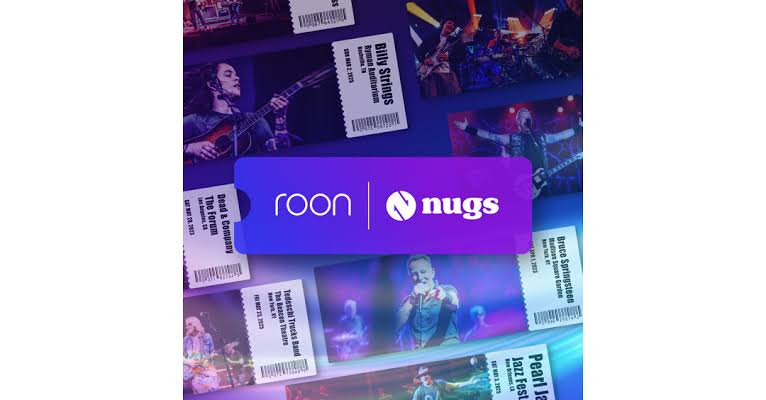
Nugs provides artist-official concert audio, exclusive livestreams, full-concert video on demand, and downloadable or physical show purchases for supported performances. Its archive includes recent shows as well as older concert recordings.
The important limitation is coverage. Nugs can be very deep for participating artists but is not a universal archive for every musician or genre.
A useful search sequence is:
- Open the artist page.
- Search by concert date, city, or venue.
- Confirm whether the result is audio, video, livestream replay, or a purchasable download.
- Compare the track list with the concert set you are seeking.
A title marked as a full show is more useful than a playlist containing only selected songs. Also note whether the concert includes all sets and encores.
Korean Broadcast Performances Often Remain With the Broadcaster
For K-pop and Korean television performances, the official broadcaster is often more useful than an audio streaming service.
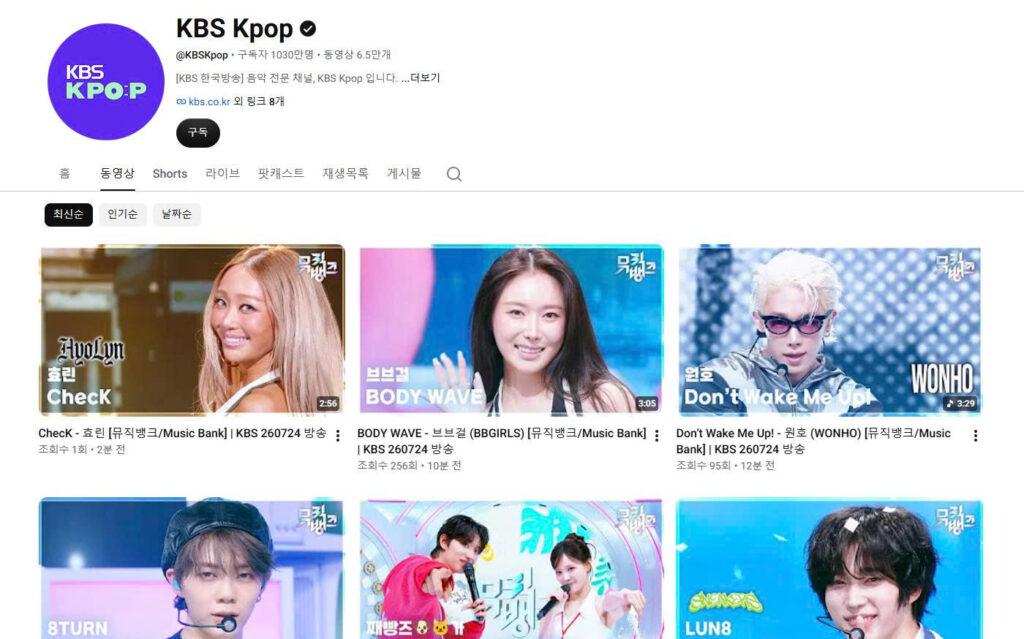
The official KBS Kpop channel contains Music Bank stages, performance compilations, interviews, festival broadcasts, facecams, and other program-specific videos. Video titles commonly identify the performer, song, program, and broadcast date, which makes it easier to distinguish one performance from another.
KBS World also maintains an official Music Bank program area with current performance clips and program information.
For example, search:
[artist] [song] Music Bank YYMMDD
[artist] KBS full set
[artist] 불후의 명곡
[artist] 방송 무대 [year]
A broadcast performance may be official even when it is not available as a separate audio track. The broadcaster may hold video rights for the program, while the artist or label controls commercial audio distribution.
Internationally, NPR Music’s official channel performs a similar role for Tiny Desk Concerts and other live sessions. Its official channel identifies itself as the home of Tiny Desk, live shows, documentaries, and related music content.
Therefore, search the program’s official archive before relying on an unofficial copy uploaded by another account.
Permission-Based Archives Cover a Different Kind of Live Recording
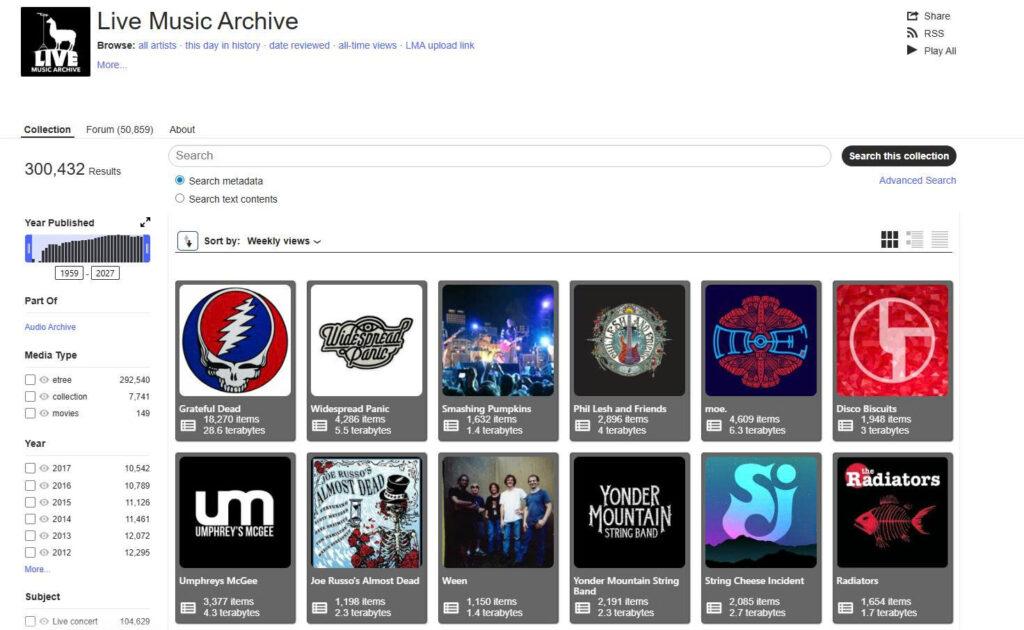
The Internet Archive’s Live Music Archive is useful when an artist permits noncommercial sharing of concert recordings.
The archive says it hosts material from “trade-friendly” artists who allow some or all of their live recordings to be distributed without charge. Its history also explains that the project sought explicit permission from artists before making recordings publicly available.
This does not mean every recording is an official commercial master. Many items are audience recordings or soundboard recordings contributed by tapers and fans under the artist’s policy.
Before listening or downloading, examine the item page for the performance date, venue, uploader, recording source, file formats, track list, and notes. Two uploads of the same concert may use different microphones, transfers, or soundboard sources.
The Live Music Archive is therefore best understood as an authorized preservation and sharing archive, not a replacement for a professionally mixed live album.
“Official,” “Authorized,” and “Complete” Are Different Claims
These terms should not be treated as interchangeable.
An official release normally comes directly from the artist, label, broadcaster, venue, or an authorized commercial partner. An authorized audience recording may have been made and uploaded by a fan, but the artist permits noncommercial recording or distribution. A complete recording should contain the full announced performance, although it may still be unofficial or have imperfect sound.
A video is easier to trust when it identifies the artist, program or venue, performance date, recording owner, and track list. A broadcaster logo or verified artist channel also helps establish the source.
Use greater caution when a video has a generic title such as “Best Live Version,” does not identify the concert, combines different outfits or stage designs, or claims to be a full show despite missing several songs.
Comments and view counts may help identify obvious errors, but they do not establish authorization or completeness.
The Most Reliable Search Order
When the performance is missing from Spotify or Apple Music, move through the following sources rather than repeatedly changing keywords on the same platform.
Start with the artist’s official website and social accounts to see whether the performance received an announced release. Next, inspect an artist-approved concert service such as Nugs. For television or radio material, search the broadcaster and the specific program. Finally, use a permission-based archive when the artist allows concert recordings to circulate.
A setlist database can help identify the exact concert date and song order, but it should be used as a locator rather than proof that a recording exists.
If the only available result is an unofficial reupload, look for the original channel name, broadcast logo, date, and program credits. An incomplete official clip is often more reliable than a “full” upload with no identifiable source.
Why a Performance May Still Be Impossible to Find
Some performances were broadcast once but never released for permanent replay. Others may have been removed because a streaming window ended, the broadcaster changed its archive, regional access changed, or the rights holder requested removal.
The recording may also exist privately without having been approved for public distribution.
In that case, there may be no legitimate service that currently offers it. Search results cannot create a release that the artist, label, or broadcaster has not made available.
Avoid sites that require unknown software, suspicious browser extensions, or payment information for an allegedly rare free recording. A missing official version is not evidence that an unverified download is safe or lawful.